
Elevator Safety Inspection Checklist for Smooth and Safe Operation
Elevator Safety Inspection Checklist for Reliable Performance
Elevators are an essential mode of vertical transportation in residential towers, commercial buildings, hotels, malls, and industrial facilities across Dubai. With the city’s high-rise landscape and continuous usage throughout the day, maintaining elevator safety is a critical responsibility for building owners and facility managers.
A structured elevator safety inspection checklist helps smooth operation, prevents unexpected breakdowns, improves passenger safety, and extends the lifespan of the lift system. It also highlights the parts and systems that play a critical role in ensuring safe, consistent, and efficient lift performance.
Comprehensive Elevator Safety Inspection Checklist
This complete checklist covers all critical areas of elevator safety, performance, and routine operation. It helps building owners, technicians, and facility managers ensure reliable functionality, prevent unexpected failures, and maintain compliance with essential safety standards.
1. Entrance and Landing Area Inspection
Before focusing on internal components, technicians first assess the exterior and landing environment to ensure safe accessibility, proper alignment, and hazard-free surroundings. This initial evaluation helps identify visible issues that may affect elevator performance or passenger safety before deeper inspections begin.
Door and Entrance Condition
- Check for dents, misalignment, or visible damage.
- Ensure that doors open and close smoothly.
- Confirm that landing doors are flush with the floor level.
Lighting and Signage
- Ensure correct illumination around the entrance.
- Verify that the load capacity label and emergency contact numbers are clearly visible.
2. Lift Operating Panel Inspection
The lift operating panel is used by passengers frequently and must function without delay or faults. Technicians check that every button responds correctly, and emergency features work reliably to support safe and efficient elevator use at all times.
Button Functionality
- All buttons must respond properly.
- Emergency stop and alarm functions must activate immediately.
- Door open/close buttons should work consistently.
Display Accuracy
- The floor display must show the correct level.
- Direction indicators should function clearly.
- Overload indicators must illuminate when required.
A malfunctioning lift operating panel can confuse passengers and may lead to unsafe elevator behavior.
3. Elevator Door Sensor Inspection
The elevator door sensor is a critical safety device designed to detect passengers entering and exiting the lift. It plays a vital role in preventing accidents, and it maintains overall passenger safety by coordinating with the lift’s control system to respond instantly to any obstruction.
Sensor Performance
- Sensors must detect movement quickly and accurately.
- No delay should occur during reopening.
- Inspect for blind spots or inconsistent detection.
Door Movement
- Check for smooth and silent motion.
- Ensure doors do not close forcefully.
- Inspect rollers, guides, and door tracks for obstructions.
A faulty door sensor is one of the most common causes of passenger safety incidents.
4. Mechanical System and Lift Cables
To ensure safe and reliable elevator operation, every component of the mechanical system should be thoroughly inspected. This checklist highlights the essential points to maintain smooth functionality, prevent issues, and ensure passenger safety.
Lift Cables
- Check for fraying, rust, or wear.
- Ensure proper tension.
- Inspect for cable lubrication and alignment.
Guide Rails and Counterweights
- Confirm smooth movement of counterweights.
- Inspect guide rails for lubrication and alignment.
Brake System
- Brakes must engage firmly without delay.
- Inspect for signs of slippage.
- Check for unusual noise during operation.
Dubai’s climate can contribute to corrosion, making mechanical inspections essential.
5. Elevator ARD (Automatic Rescue Device) Inspection
The elevator ARD is mandatory in many buildings and serves as a crucial safety component, guaranteeing proper elevator operation during emergencies, preventing accidents, and protecting passengers by automatically controlling door and movement safety mechanisms.
ARD Functionality Checks
- ARD must activate immediately when a power failure occurs.
- The elevator should move to the nearest floor automatically.
- Doors must open safely for passenger exit.
- Test backup duration and battery efficiency.
A non-functional elevator ARD can result in passengers being trapped during an outage, making this inspection critical.
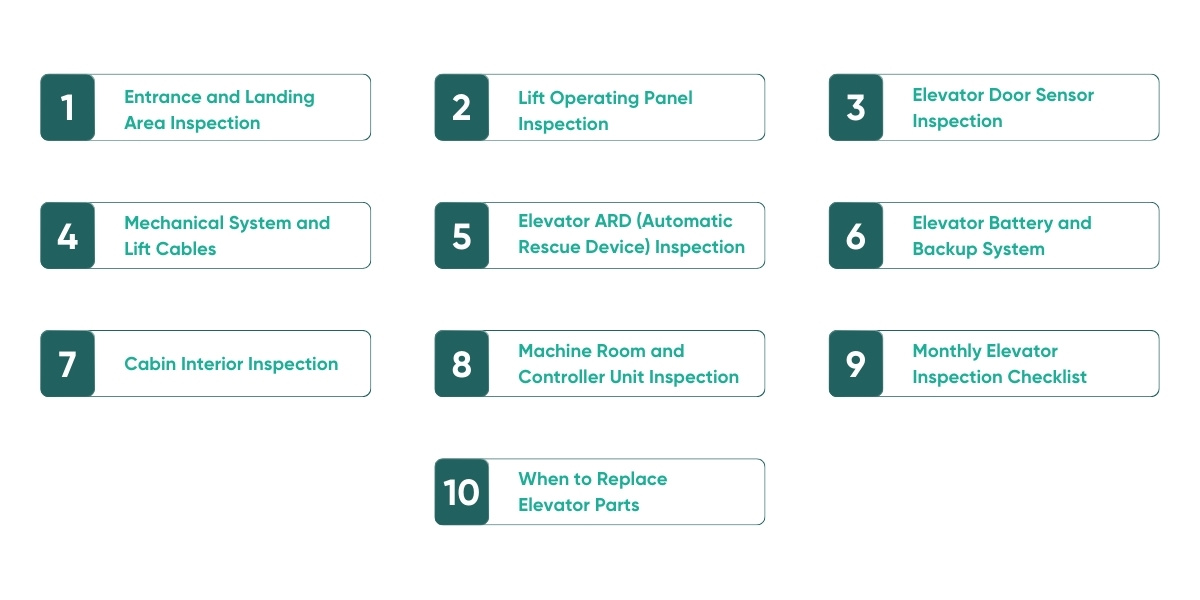
6. Elevator Battery and Backup System
Elevator batteries provide critical backup power for emergency functions, supporting systems such as the ARD, alarms, and emergency lighting. Proper maintenance provides these components operate reliably during power outages and prevents operational interruptions.
Battery Condition
- Inspect voltage and charging levels.
- Evaluate for leakage, corrosion, or swelling.
- Check backup power performance during testing.
Charging System
- Charging indicators should display correctly.
- Ensure stable power flow from the controller to the battery.
A reliable backup system is essential in high-rise buildings across Dubai.
7. Cabin Interior Inspection
A comfortable and safe cabin interior contributes to a positive user experience, offering passengers adequate space, secure handrails, clear signage, proper lighting, and smooth operation. Regular maintenance keeps both safety and comfort at optimal levels.
Cabin Lights and Ventilation
- Ensure all LED lights, ventilation fans, and ceiling fixtures work.
- Check for loose fittings or unusual noise.
Walls, Flooring, and Handrails
- Inspect for scratches, cracks, or loose panels.
- Ensure flooring is non-slip and secure.
- Verify that handrails are firmly attached.
Emergency Communication
- Test the intercom or emergency phone.
- Ensure instant connection to the control room or security desk.
8. Machine Room and Controller Unit Inspection
The machine room contains critical elevator components, including motors, controllers, and safety systems. Proper upkeep and regular inspections help maintain smooth operation, prevent malfunctions, and support overall elevator safety and reliability.
Controller System
- Inspect wiring for looseness or corrosion.
- Check all fuses, terminals, and circuit boards.
- Verify proper cooling and ventilation.
Motor and Drive
- Listen for unusual sounds.
- Inspect oil levels (for hydraulic systems)
- Check the VFD (Variable Frequency Drive) for stable operation.
9. Monthly Elevator Inspection Checklist
A monthly elevator inspection checklist allows facility managers to monitor and maintain consistent safety standards, identify potential issues early, and keep all elevator systems operating smoothly and reliably. It reduces the risk of sudden failures and extend the life of elevator parts.
- Test elevator travel smoothness.
- Inspect door sensor response.
- Verify ARD activation and functionality.
- Check lift cables and mechanical parts.
- Inspect cabin lighting and ventilation.
- Verify emergency alarm and communication.
- Check battery backup and charging system.
- Test landing-level accuracy.
- Examine control panel buttons.
10. When to Replace Elevator Parts
Some elevator components have a limited lifespan and require timely replacement to avoid safety risks, operational disruptions, or costly repairs. Regular monitoring of wear, performance, and manufacturer recommendations helps determine the right time for replacement.
Common parts that may need replacement include:
- Elevator door sensors
- Lift cables
- Operating panel buttons
- Elevator batteries
- Cabin lights
- Safety relays
- ARD batteries
Using parts from trusted elevator spare parts suppliers in Dubai ensures long-term reliability and compliance with safety standards.
Importance of Elevator Safety Inspections in Dubai
A professional inspection allows technicians to identify early signs of wear and address issues before they escalate. Benefits include:
- Minimize the risk of accidents.
- Reduce operational downtime.
- Avoid costly emergency repairs.
- Ensure compliance with UAE and Dubai safety standards.
- Maintain consistent performance and passenger comfort.
Achieve Safe and Reliable Elevator Performance
A well-structured and consistent elevator safety inspection checklist is essential for ensuring safe and reliable lift operation in a high-rise environment. By regularly inspecting components such as the elevator ARD, lift operating panel, elevator door sensor, lift cables, and elevator battery, facility managers can prevent breakdowns, enhance passenger safety, and maintain operational efficiency.
Dubai has a wide range of suppliers offering various parts. Choosing the right elevator parts supplier like Elevator Mart, guarantees that the lift remains safe, efficient, and compliant. Regular inspections, combined with the use of high-quality elevator parts, help ensure smooth performance and long-term durability