
Role of Elevator Programming Tools in Lift Maintenance

Understanding the Role of Elevator Programming Tools in Elevator Care
Modern elevators are no longer simple mechanical systems. They are controlled by advanced electronic boards, software logic, and digital safety systems. Because of this shift, maintenance today depends heavily on specialised tools that help technicians communicate with elevator controllers. Understanding the role of elevator programming tools in lift maintenance is important for building owners, facility managers, and service teams who want safe and reliable lift operation.
These tools are not just used during installation. They play a key role throughout the entire life of an elevator, from routine servicing to troubleshooting and upgrades. Below are the most important roles these tools perform in daily and long-term lift maintenance.
Role of Elevator Programming Tools in Improving Lift Performance
The role of elevator programming tools is to help technicians understand, control, and maintain modern lift systems more effectively. These tools allow direct communication with the elevator controller, making it easier to monitor performance, detect faults, test safety functions, and adjust system settings. By providing accurate data and controlled access, they support safer maintenance, quicker repairs, and more reliable elevator operation throughout the system’s life cycle.
1. Identifying System Faults Accurately
One of the most important roles of programming tools is fault identification. When a lift behaves unexpectedly or stops working, the cause is not always visible. Programming interfaces allow technicians to read fault logs and error codes stored in the controller.
This direct access helps pinpoint the exact issue, whether it involves door operation, speed control, or safety circuits. Accurate fault detection reduces guesswork and prevents unnecessary part replacement, saving time and cost during maintenance work.
2. Monitoring Real-Time Elevator Performance
Another key role is monitoring how the elevator performs during operation. Programming tools provide real-time data such as motor speed, load conditions, and door response timing. This allows technicians to observe how the lift behaves under different conditions.
By reviewing live performance data, technicians can detect early signs of wear or imbalance. This role helps ensure smooth travel and consistent ride comfort for users while preventing minor issues from developing into serious problems.
3. Adjusting Operational Parameters Safely
Elevators rely on carefully set parameters to function correctly. These include acceleration levels, stopping accuracy, door opening speed, and travel limits. Programming tools allow technicians to adjust these values in a controlled and safe manner.
This role is especially important when environmental conditions change or when components age. Proper parameter adjustment maintains safety standards while ensuring the elevator continues to operate smoothly and efficiently.
4. Supporting Preventive Maintenance Activities
Preventive maintenance focuses on avoiding breakdowns rather than reacting to them. Programming tools play a central role by storing usage data such as travel cycles, operating hours, and system stress levels.
By analysing this data, technicians can plan maintenance tasks based on actual usage rather than fixed schedules. This role improves reliability and extends the lifespan of elevator components by addressing issues before failures occur.
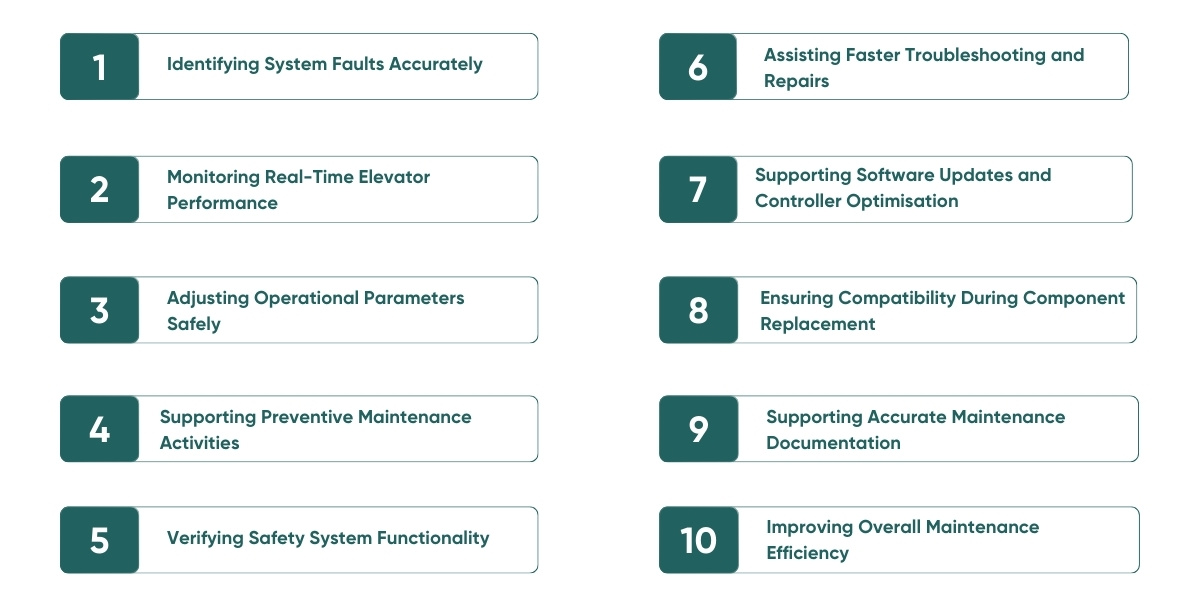
5. Verifying Safety System Functionality
Safety systems are the most critical part of any elevator. Elevator programming tools help technicians test and confirm that safety features such as emergency brakes, door locks, and overspeed protection work as intended.
Through test modes and digital simulations, technicians can verify safety responses without risking passenger safety. This role ensures compliance with safety regulations and provides confidence that the lift can handle emergency situations correctly.
6. Assisting Faster Troubleshooting and Repairs
When an elevator is out of service, speed matters. Programming tools help technicians access detailed system information quickly, reducing the time spent searching for the problem.
This role allows faster troubleshooting and repair, minimising downtime for building occupants. Quick fault resolution is especially important in commercial buildings where elevator availability affects daily operations.
7. Supporting Software Updates and Controller Optimisation
Elevator controllers often require software updates to fix bugs, improve performance, or support new features. Programming tools make it possible to update and optimise controller software without changing physical hardware.
This role helps older elevators stay compatible with modern operational and safety standards. Software optimisation also improves system stability and reduces recurring faults over time.
8. Ensuring Compatibility During Component Replacement
During maintenance, electronic components may need replacement due to wear or failure. Lift programming tools help configure new components, so they communicate correctly with the existing system.
This role is essential when working with different elevator parts from approved suppliers. Proper configuration prevents communication errors and ensures the replaced components function seamlessly within the system.
9. Supporting Accurate Maintenance Documentation
Maintenance records are important for tracking performance history and meeting inspection requirements. Programming tools store data such as fault history, parameter changes, and service actions.
This role helps technicians maintain clear documentation that can be reviewed during audits or future service visits. Accurate records also support better decision-making for long-term maintenance planning.
10. Improving Overall Maintenance Efficiency
Finally, programming tools improve efficiency across all maintenance activities. They reduce manual checks, speed up diagnostics, and guide technicians through structured processes.
This role helps maintenance teams work consistently, even across different sites and systems. It also supports collaboration with elevator spare parts suppliers in Dubai by clearly identifying required elevator parts, ensuring faster sourcing through trusted providers like Elevator Mart.
Keeping Elevators Reliable Through Programming Tools
The role of elevator programming tools is deeply connected to modern lift maintenance practices. From diagnostics and safety verification to upgrades and record keeping, these tools support every stage of an elevator’s operational life. Understanding their importance helps building managers and service teams make better maintenance decisions and ensure smooth, safe vertical transportation for years to come.