
Function Of Braking Resistor In Elevator Systems Explained

Top Function Of The Braking Resistor In The Elevator You Should Know
Elevator systems rely on many hidden components working together to deliver safe and smooth vertical movement. While motors and control panels often get the most attention, certain supporting parts play an equally important role behind the scenes. One such component is the braking resistor, which helps manage electrical energy during elevator operation. Understanding the function of the braking resistor in elevator systems is essential for anyone involved in lift maintenance, system selection, or building management. This blog explains the key operational functions of this component and how it contributes to safety, performance, and long-term reliability in modern elevator installations.
Exploring The Function Of The Braking Resistor In Elevator Systems
Modern elevators are designed to move smoothly, stop safely, and operate efficiently even under heavy load conditions. One of the key components that helps achieve this balance is the braking resistor. Although it works quietly in the background, it plays a major role in ensuring elevator safety, performance, and reliability. Understanding how this component functions helps building owners, technicians, and buyers make better decisions when selecting elevator parts.
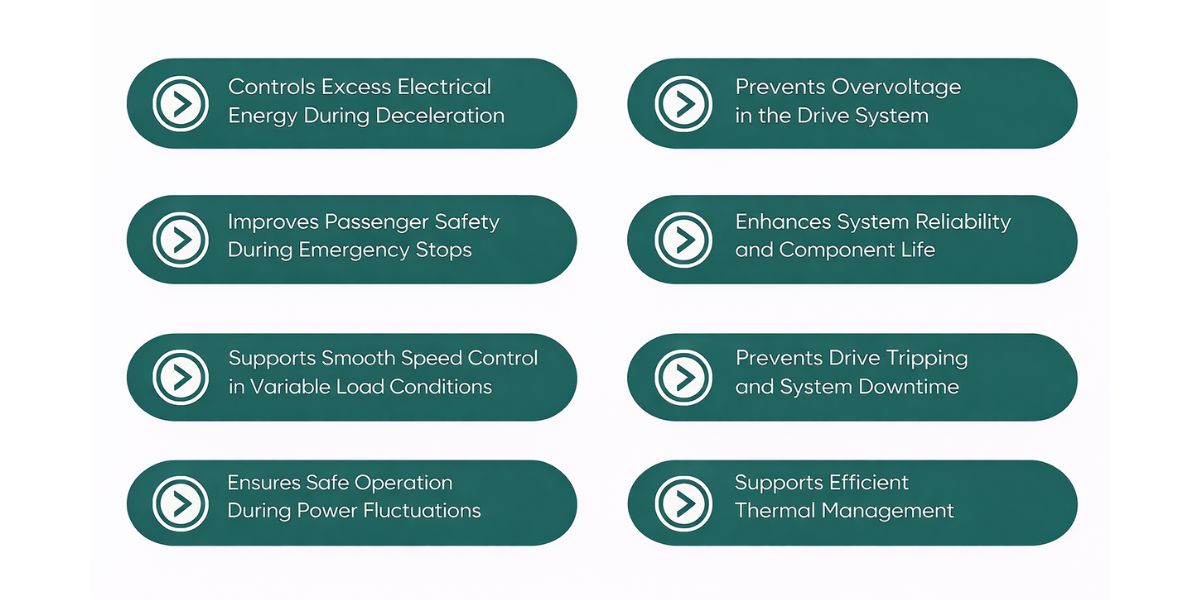
Below are the eight essential functions performed by this critical component in elevator systems.
1. Controls Excess Electrical Energy During Deceleration
One of the most important tasks of the braking resistor is managing the excess electrical energy generated when an elevator slows down. When a lift carrying a heavy load moves downward, or an empty car travels upward, the motor starts acting like a generator. This process produces extra energy that cannot be sent back into the power supply.
If this energy is not controlled, it can damage sensitive electrical components. The resistor absorbs this excess energy and safely converts it into heat. This controlled energy handling clearly explains the function of the braking resistor in elevator operation during deceleration phases.
2. Prevents Overvoltage In The Drive System
Overvoltage is a common risk in elevator drive systems, especially during sudden stops or rapid speed changes. High voltage levels can cause inverter faults, system shutdowns, or long-term damage to the drive unit.
The braking resistor protects the system by keeping the voltage within safe limits. When the voltage rises beyond a preset level, the resistor activates instantly to stabilise it. This function helps maintain consistent elevator performance and reduces the chances of unexpected breakdowns in daily operation.
3. Improves Passenger Safety During Emergency Stops
Passenger safety is always a top priority in elevator design. During emergency braking situations such as power fluctuations or abrupt stops, uncontrolled energy can cause jerky movement or harsh stopping.
By absorbing and dissipating excess energy quickly, the braking elevator resistor ensures smooth deceleration. This reduces sudden jolts and makes emergency stops safer and more comfortable for passengers. In high-rise buildings, this function becomes especially important where elevators operate at higher speeds.
4. Enhances System Reliability And Component Life
Electrical stress is one of the main reasons for early failure of elevator components. Without proper energy control, parts such as drives, capacitors, and motors experience excessive load during braking cycles.
The braking resistor reduces this stress by managing regenerative energy efficiently. As a result, the entire elevator system operates under balanced electrical conditions. This extends the lifespan of multiple elevator parts and reduces frequent maintenance requirements, saving time and cost for building operators.
5. Supports Smooth Speed Control In Variable Load Conditions
Elevators rarely carry the same load every trip. Sometimes they operate with full capacity, while at other times they move nearly empty. These varying load conditions affect motor behaviour and energy generation.
The braking resistor supports smooth speed control by adjusting energy dissipation based on load differences. This ensures consistent movement regardless of passenger weight. This stability highlights the role of the braking resistor in elevator systems that rely on precise speed regulation for passenger comfort.
6. Prevents Drive Tripping And System Downtime
Drive tripping occurs when voltage or current levels exceed safe operating limits. When this happens, the elevator may stop functioning until the fault is cleared, causing inconvenience and safety concerns.
By absorbing surplus energy during regenerative braking, the resistor prevents voltage spikes that lead to drive tripping. This function plays a major role in keeping elevators operational throughout the day, especially in commercial buildings with heavy traffic.
7. Ensures Safe Operation During Power Fluctuations
Power supply variations are common in many regions and can affect elevator performance. Sudden voltage changes during braking can cause instability if not handled properly.
The braking resistor acts as a protective buffer during these fluctuations. It ensures that excess energy does not flow back into the system uncontrollably. This function adds an extra layer of protection and helps elevators continue operating safely even under unstable power conditions.
8. Supports Efficient Thermal Management
Heat generation is unavoidable when electrical energy is dissipated. One often overlooked function of the braking resistor is managing this heat safely without affecting nearby components.
Designed with proper resistance values and heat dissipation capacity, the elevator resistor releases heat in a controlled manner. This prevents overheating inside control panels and machine rooms. Quality suppliers like Elevator Mart ensure that these components meet thermal safety standards for long-term performance.
Closing Insights For Efficient Elevator Performance
The braking resistor may be a small part of an elevator system, but its impact is significant. From controlling excess electrical energy to preventing drive faults and ensuring passenger safety, this component plays multiple critical roles. Understanding the function of the braking resistor in an elevator helps building managers, technicians, and system designers make informed decisions about maintenance, upgrades, and part selection. By choosing high-quality elevator resistors from trusted elevator parts suppliers, such as Elevator Mart, and ensuring proper installation, you can enhance the reliability, efficiency, and longevity of your elevator system.