
Role of PG Cards in Modern Elevator Systems
Unlocking the Role of PG Cards in Modern Elevator Systems
Elevators are more advanced than they have ever been in modern high-rise buildings and smart infrastructure. Underlying their flawless and safe operation is a complex network of electronic parts cooperating exactly. PG cards are absolutely essential among these elements in guaranteeing safety, accuracy, and performance. Maintaining dependable and effective vertical transit requires technicians, property managers, and building owners to understand the role of pg cards in elevator systems
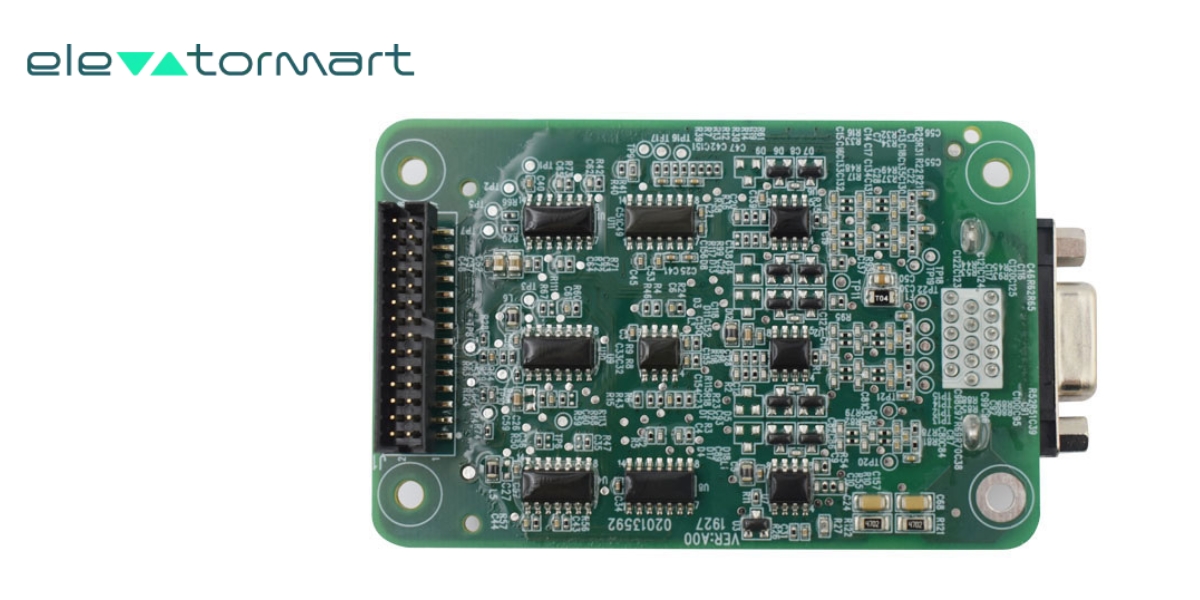
Modern elevators depend heavily on electronic accuracy. From smooth acceleration to precise floor levelling, every movement is carefully monitored and controlled. At the heart of this control system are elevator pg cards, which act as a communication bridge between the motor encoder and the elevator controller.
Role of PG Cards in Elevator Control
Elevator performance depends on accurate speed monitoring, precise motion control, and seamless coordination between multiple components.
PG cards enable this precision by acting as the communication link between the motor encoder and the elevator controller.
Their role extends across several critical functions, including:
1. Motor Speed Monitoring and Regulation
The primary role of pg cards in elevator systems begins with monitoring motor speed. The encoder fastened to the motor shaft sends pulse signals to PG cards. These pulses are turned into exact speed data and then sent to the central controller.
This real-time response enables the controller to:
- Regulate acceleration smoothly
- Maintain constant travel speed
- Ensure controlled deceleration
- Prevent sudden jerks
Without proper speed regulation, elevators would experience unstable motion and inconsistent performance.
2. Real-Time Feedback Processing
Elevator pg cards continuously process rotational signals to determine shaft position and direction of movement. This results in a closed-loop control system whereby the controller continuously compares programmed values with actual motor performance.
The system instantly corrects any observed variance. This constant communication ensures operational accuracy and consistent ride quality.
3. Smooth Ride Control
Passenger comfort is a major requirement in modern buildings. One of the most important responsibilities of lift pg cards is ensuring smooth speed transitions.
PG cards help eliminate:
- Sudden starts
- Vibrations
- Abrupt stops
- Inconsistent acceleration
They provide smooth vertical motion by quickly correcting motor output upon slight deviations. Smooth ride quality in high-rise business and residential towers directly mirrors brand image and system dependability.
4. Precise Floor Levelling
For accessibility and safety, exact floor levelling is essential. Based on motor rotation pulses, PG cards determine the exact location of the elevator cabin.
They help the system:
- Determine the correct deceleration timing
- Align the cabin precisely with the landing floors
- Reduce trip hazards
- Improve passenger convenience
In hospitals, shopping centers, and public structures with severe accessibility requirements, correct levelling becomes particularly vital.
5. Overspeed Detection and Safety Control
Safety is the backbone of elevator operations. PG cards monitor motor speed patterns continuously. If abnormal speed levels are detected, the controller is alerted immediately.
This function allows the system to:
- Trigger emergency braking
- Prevent overshooting floors
- Activate safety protocols
- Reduce mechanical strain
By supporting overspeed detection, PG cards contribute significantly to overall elevator safety.
6. Load Adaptation and Torque Adjustment
Elevators operate under varying passenger loads. A fully loaded cabin requires a different torque compared to an empty one.
PG cards provide the feedback necessary for:
- Instant torque compensation
- Balanced motor performance
- Stable movement regardless of weight
- Reduced mechanical stress
In business structures, this guarantees dependable performance throughout peak traffic periods.
7. Energy Efficiency Optimisation
In modern infrastructure, energy efficiency is becoming increasingly important. PG cards contribute by enabling accurate motor control and preventing unnecessary power usage.
With real-time speed data, the drive system can:
- Adjust power output based on demand
- Avoid excessive energy consumption
- Improve drive efficiency
- Reduce operational costs
Smart energy control not only reduces electricity costs but also promotes sustainable construction methods.
8. Drive Synchronisation
Proper synchronisation between the motor and variable frequency drive (VFD) is essential. PG cards ensure frequency alignment and stable motion control.
This synchronisation:
- Prevents operational errors
- Enhances performance stability
- Extends motor lifespan
- Reduces wear and tear
In modern fast elevator systems, especially, effective synchronisation is vital.
9. Performance in High-Speed Elevators
Elevators in tall commercial structures move more quickly. Such systems make accuracy control even more crucial.
PG cards help maintain:
- Stable monitoring at high RPM
- Controlled braking
- Accurate stopping
- Prevention of floor overshooting
Without reliable PG cards, high-speed elevators would face performance and safety challenges.
10. Diagnostic and Maintenance Support
PG cards help with diagnostics as well. They enable technicians to spot problems rapidly by sending accurate motor performance data.
High-quality elevator parts help maintenance teams guarantee regular system performance. Many experts depend on reputable elevator spare parts suppliers in Dubai for components to ensure operational dependability. By supplying appropriate and long-lasting parts for contemporary elevator systems, vendors such as Elevator Mart help maintenance teams.
Good components improve long-term system efficiency, avoid recurring failures, and cut down on downtime.
Power of PG Cards in Ensuring System Reliability
Overall, PG cards are central to maintaining elevator stability. Their role extends across:
- Speed regulation
- Floor levelling accuracy
- Safety monitoring
- Energy management
- Load control
- Diagnostic feedback
PG cards directly affect the dependability of the whole elevator system by guaranteeing correct communication between the motor and the controller.
In contemporary structures, where lifts run all day long, even little electrical errors can cause significant disturbances. PG cards reduce such hazards by constant precision control.
Evolving Role of PG Cards in Future Elevator Systems
Modern lifts' dependability and performance rely much on sophisticated electrical control systems. Fundamental in controlling motor speed, guaranteeing smooth ride quality, maintaining exact floor alignment, and improving general safety, PG cards play a part in elevator systems.
Elevator PG cards enable all essential features needed for steady vertical mobility, from overspeed detection to energy optimisation. Their part in efficiency, safety, and performance turns them into a pillar of contemporary elevator systems.
Building owners and maintenance experts can guarantee less downtime and sustained operational stability by sourcing premium components from reputable vendors, such as Elevator Mart, and keeping correct system calibration. PG cards will still be essential in providing safe, effective, and high-performance elevator systems as urban infrastructure keeps growing and changing.