
Types of Elevator Power Supply Systems
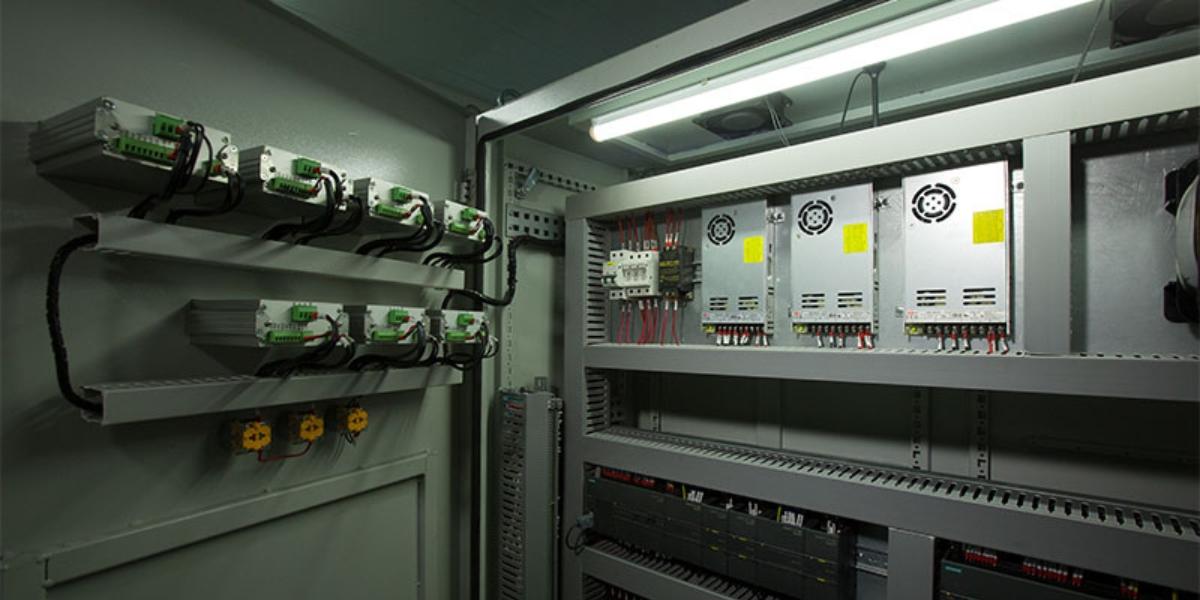
Exploring the Types of Elevator Power Supply Systems Used Today
Every elevator in operation today relies on a dedicated power supply to move cabins, run controllers, operate doors, and keep safety systems active. But not all lifts draw power the same way. Depending on the building type, elevator capacity, and local electrical infrastructure, engineers choose from several different elevator power supply systems to match each installation.
Understanding these options helps building owners and facility managers make better decisions during installation, upgrades, or emergency planning. This article explores the main types of elevator power supply systems used in modern buildings — from standard grid power to advanced backup and regenerative solutions.
Why Understanding Elevator Power Supply Systems Matters
The power supply is the foundation of every lift. It determines how much load the elevator can carry, how smoothly it runs, how long it stays operational during outages, and how energy-efficient the system is overall.
Choosing the wrong power setup can lead to frequent shutdowns, overheating, or an inability to meet safety code requirements. The different types of power supply systems in elevators each have specific strengths, and knowing what each one does makes it easier to match the right setup to the right building.
Single-Phase AC Power Supply
Single-phase AC is the simplest form of elevator power supply. It uses one live conductor and one neutral, delivering power in a single alternating wave pattern.
This type is typically used in:
- Small residential elevators
- Home lifts with low load capacity (under 500 kg)
- Low-rise buildings with limited electrical infrastructure
Single-phase systems are cost-effective and easy to install, but they are not suitable for high-traffic or heavy-duty lifts. The power output is simply not enough to handle the continuous demands of commercial buildings or elevators carrying heavier loads.
Three-Phase AC Power Supply
Three-phase AC is the standard elevator power supply in commercial and high-rise applications. It uses three conductors carrying alternating current, each offset by 120 degrees, which provides a continuous and balanced power flow to the motor.
Key advantages of three-phase power include:
- Higher efficiency and smoother motor operation
- Ability to handle heavy loads and frequent travel cycles
- Reduced voltage fluctuations during acceleration and deceleration
- Better compatibility with modern variable frequency drives
Most commercial elevators, hospital lifts, and high-rise installations use three-phase power as their primary source. It is also the standard input for most modern VFD-controlled elevator systems, making it the default choice for any installation that handles regular traffic.
UPS (Uninterruptible Power Supply) Systems
A UPS is a backup power source that activates the moment the main power is interrupted. Unlike a generator, which takes time to start, a UPS delivers uninterrupted electricity within milliseconds, preventing the lift from stopping mid-travel and leaving passengers stranded.
A typical elevator UPS contains four main components: a rectifier, a battery pack, an inverter, and a static switch. When grid power fails, the battery feeds the inverter, which converts DC back to AC to keep the elevator running smoothly.
UPS systems are now considered essential in commercial buildings, hospitals, airports, and high-rise towers where even a brief power loss can trap passengers or disrupt critical services. Many local safety codes now require them as part of elevator safety compliance.
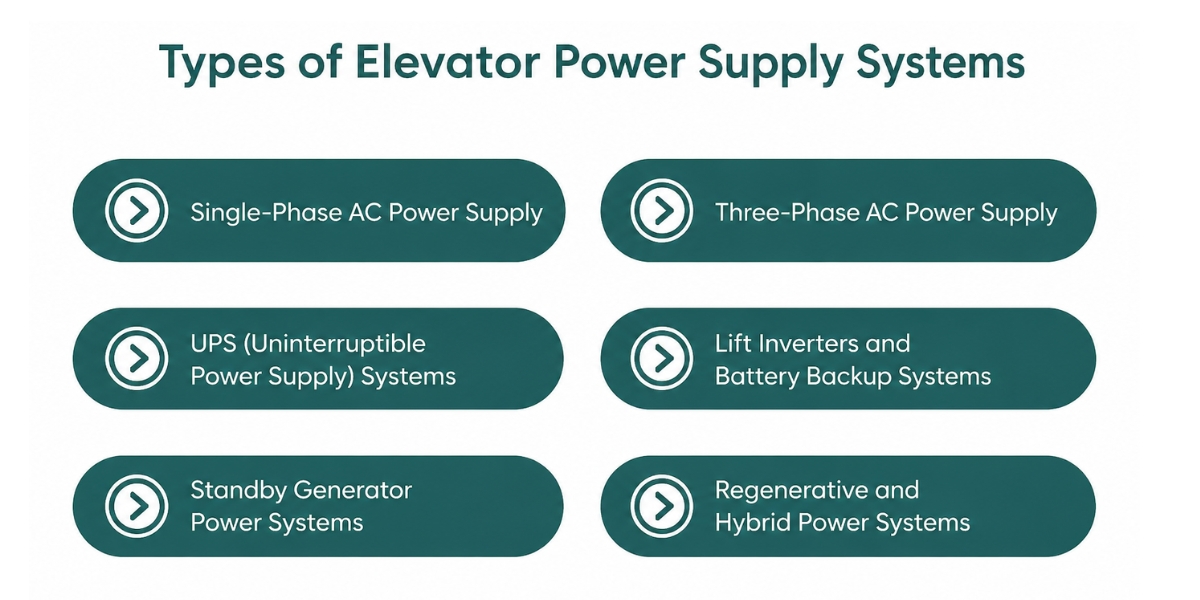
Lift Inverters and Battery Backup Systems
Lift inverters — also called Auto Rescue Devices (ARDs) — are a more focused form of backup. Instead of keeping the elevator in full operation during an outage, they provide just enough power to move the cabin safely to the nearest floor and open the doors, allowing passengers to exit safely.
This setup is common in:
- Mid-rise residential buildings
- Small commercial properties
- Retrofit installations where full UPS coverage is too costly
Battery options include lead-acid (affordable, 3-5 year life) and lithium-ion (longer life, more compact, faster charging). The quality of batteries and supporting elevator parts has a direct impact on how reliable the backup response will be during a real outage.
Standby Generator Power Systems
Generators provide long-term backup power during extended outages. When grid electricity fails, the generator starts automatically — usually within 10 to 30 seconds — and takes over the entire building’s electrical load, including the elevator and its support systems.
Generator-based lift power supply is common in:
- Hotels and hospitals with emergency power requirements
- Large commercial towers with 24/7 operation
- Buildings in regions with unstable grid supply
While generators offer extended runtime, they require regular fuel supply, maintenance, and testing to stay reliable. Many buildings now pair generators with UPS systems so the lift keeps running during the brief gap before the generator kicks in, giving the best of both worlds.
Regenerative and Hybrid Power Systems
Modern elevators increasingly use regenerative drives to recover energy during descent and braking. Instead of wasting that energy as heat through a braking resistor, the drive feeds it back into the building’s electrical system for other uses.
Hybrid power systems take this a step further by combining:
- Grid power is the primary supply
- Solar or renewable energy sources are available
- Energy storage through batteries or capacitors
These systems are still emerging in many markets but are becoming more common in green-certified buildings and energy-conscious developments. They reduce both energy bills and carbon footprint, and they are shaping the future direction of elevator power supply systems around the world.
Choosing the Right Power Supply for Your Elevator System
Each elevator installation has its own power demands, and the type of supply chosen directly affects performance, safety, and running costs. From basic single-phase AC to advanced regenerative setups, every option has a specific role to play in modern lift systems.
Building owners planning a new installation, system modernisation, or backup upgrade benefit from working with experienced elevator spare parts suppliers in Dubai like Elevator Mart, who can help match power supply components to the specific requirements of a building and ensure smooth, reliable operation for years to come.